The finish is the first thing the end customer sees on a window, façade or piece of furniture, and it is also what protects the profile for years. The two most common choices are anodizing and powder coating, and each has its strengths.
Anodizing
An electrochemical process that turns the aluminium surface itself into a hard oxide layer. The layer is part of the metal rather than sitting on top of it, so it cannot peel. The profile keeps a metallic look, typically in silver, champagne, bronze or black.
- Premium metallic look and a hard, scratch-resistant surface.
- Suits façades, interiors and appliances where the metal look matters.
- Colour choice is limited compared with coating.
Powder coating
Polyester powder is sprayed electrostatically onto the profile and cured in an oven into a continuous film. Its main advantage is colour freedom: virtually any RAL colour, in matt, satin or gloss.
- A huge colour range that matches any design.
- A uniform film that hides minor surface marks.
- The base for wood effect, which is printed over the coating.
At a glance
| Anodizing | Powder coating | |
|---|---|---|
| Look | Metallic | Solid colour or wood |
| Colours | Limited | Virtually all RAL |
| Scratch resistance | Very high | Good |
| Best for | Façades, interiors, appliances | Windows, doors, kitchens, furniture |
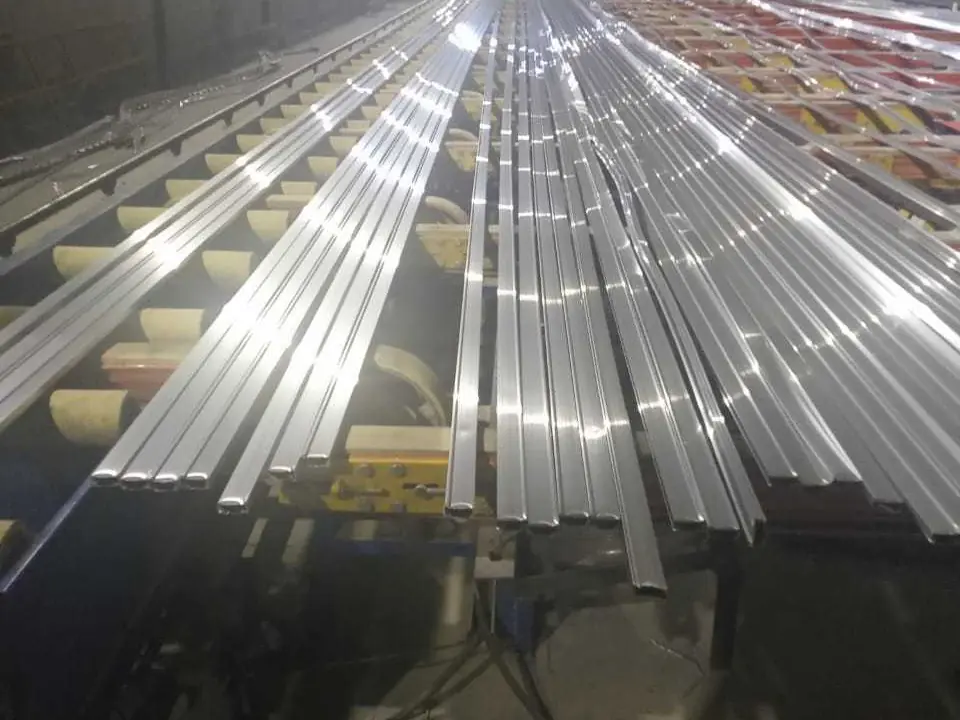
When is mill finish the right choice?
For structural or concealed profiles, or when the part will be finished later by the customer. It is the most economical option.
Before you order
The finish affects minimum order and lead time. Always ask for a physical colour sample before confirming, because screen colours are only approximate.